
OSHA Training That Helps Your People Make Better Decisions When the Work Gets Real
A certificate can satisfy a requirement.
It cannot inspect the ladder for your employee.
It cannot tell a lift operator that the ground conditions have changed.
It cannot stop someone from using damaged equipment.
It cannot make a supervisor recognize that today's scaffold condition is different from yesterday's.
Training has to do more than exist on paper.
Your team should not have to guess when the risk is real.
Boston Safety & Compliance provides practical OSHA training that helps workers and supervisors see hazards sooner and know what to do next.
Led by Jeffery Barnett, training connects safety requirements to the equipment, conditions, responsibilities, and decisions employees face during real work.
Boston Safety & Compliance works with:
Construction companies
Contractors and subcontractors
Industrial employers
Manufacturers
Oil and natural gas operations
Commercial businesses
Growing companies
Multi-site employers
Larger organizations
Internal safety teams needing outside training support
Core training services include:
Additional specialized workplace safety training may also be available depending on your workforce, equipment, hazards, project requirements, and operations.
Whether you need one class for a small crew or recurring safety training across multiple teams, the purpose is the same:
Help your people recognize hazards sooner, understand what is expected, and have a better opportunity to go home safely at the end of the day.
Based in Chickasha, Oklahoma. Serving qualifying businesses and organizations nationwide.
Safety Training Should Change What Happens After the Class Ends
Your employees do not work in theory. They work on ladders, on roofs, from scaffolds and lifts, around electricity, near moving equipment, with tools, machinery, vehicles, chemicals, materials, and changing jobsite conditions.
And the conditions they saw during the morning meeting may not be the conditions they face three hours later.
That is where training earns its value.
Boston Safety & Compliance helps workers and supervisors better understand:
What hazards they should be watching for.
Why those hazards matter.
What safety expectations apply.
What safer work practices look like.
What employees are responsible for.
What supervisors need to notice and correct.
When equipment should be taken out of service.
When changing conditions require another look.
When work may need to stop.
How inspection and documentation support accountability.
Why small decisions can create much larger consequences.
The goal is not to overwhelm employees with regulatory language they will forget.
It is to help them understand what matters, why it matters, and what they are expected to do when the hazard is no longer a classroom example.
When Training Is Missing, the Risk Does Not Stay on Paper
You see it when a damaged ladder stays in service because nobody removes it.
You see it when an operator climbs into a lift without completing an inspection.
You see it when employees work at height without fully understanding the fall hazard.
You see it when scaffold conditions change and nobody stops to reassess them.
You see it when machinery is serviced without a clear understanding of the energy involved.
You see it when a supervisor knows something does not look right but is unsure what should happen next.
And sometimes the gap is not discovered until:
Someone gets hurt
OSHA arrives
A general contractor asks for training documentation
A client requests proof
An insurer starts asking questions
A corrective action identifies missing instruction
That is too late to discover what your employees were never taught.
Your people deserve training before the hazard becomes an incident.
Boston Safety & Compliance connects workplace safety requirements to the actual work being performed so employees can better recognize problems while there is still time to do something about them.
When your people face real hazards, their training should be just as real.

OSHA Training Built Around Your Workforce, not a Generic Template
No two companies arrive at safety training for exactly the same reason.
Some need one OSHA 10 class before a project begins.
Some are growing quickly and need consistency across crews.
Some have experienced supervisors but need stronger workforce instruction.
Some already have an internal safety department and simply need a knowledgeable outside trainer for specific topics.
Boston Safety & Compliance builds the training conversation around the organization, the work, and the actual reason training is needed.
-
You should not have to buy an oversized safety program to get useful training for a small crew.
Maybe a general contractor requires OSHA 10.
Maybe your customer wants proof of training.
Maybe an insurer is asking more questions.
Maybe you have new people in the field and informal instruction is no longer enough.
Or maybe you simply know your employees need a stronger safety foundation before someone gets hurt.
Boston Safety & Compliance helps smaller organizations get focused training without creating unnecessary complexity.
A Strong Fit For
Small contractors
Specialty subcontractors
Roofing companies
Local service businesses
Small construction crews
Businesses needing OSHA 10
Companies without full-time safety personnel
Employers needing targeted compliance training
Teams preparing for a new project
The goal: Give your people useful instruction without building a program your company cannot realistically maintain.
-
Growth creates opportunity.
It also creates more opportunities for inconsistency.
More employees.
More supervisors.
More equipment.
More jobsites.
More documentation.
More people are teaching new employees “the way we do it.”
Before long, one crew may be working from a completely different set of assumptions than another.
Boston Safety & Compliance helps growing organizations establish clearer safety expectations through OSHA 10, OSHA 30, ladder, lift, scaffold, fall protection, equipment-related, and customized OSHA compliance training.
A Strong Fit For
Growing contractors
Construction companies
Industrial employers
Commercial businesses
Manufacturing teams
Organizations without a full-time safety director
Companies needing recurring training
Businesses strengthening supervisor accountability
As your company grows, training can help make sure your safety expectations grow with it.
-
Larger organizations often need more than one scheduled class.
You may need:
New-employee training
Multiple sessions
Multiple shifts
Recurring compliance education
Supervisor development
Project-specific instruction
Specialized equipment training
Outside instruction that supports an established internal safety department
Boston Safety & Compliance may support qualifying organizations across departments, crews, projects, and locations.
A Strong Fit For
Large contractors
Multi-site employers
Industrial operations
Oil and natural gas companies
Manufacturing facilities
Corporate safety departments
Enterprise organizations
Businesses needing in-house training support
Companies seeking more consistent instruction across teams
Your internal team does not have to carry every training need alone.

OSHA and Workplace Safety Training Classes
The right course starts with the work your employees actually perform.
The following core courses may be provided independently or incorporated into a broader workforce safety plan depending on your company, hazards, employees, equipment, and requirements.
Course length, delivery method, prerequisites, completion documentation, class size, equipment needs, and availability should be confirmed before scheduling.
-
OSHA 10 provides introductory safety education for workers who need a stronger understanding of workplace hazards, worker rights, employer responsibilities, and foundational safety expectations.
But completing ten instructional hours should not be the end goal.
Employees should leave better able to recognize what those concepts look like when they return to work.
OSHA 10 Training May Cover
Worker rights
Employer responsibilities
OSHA inspection basics
Hazard recognition
Fall hazards
Ladder awareness
Personal protective equipment
Electrical safety awareness
Struck-by hazards
Caught-in or between hazards
Safe work practices
Reporting concerns
Jobsite responsibilities
Best Suited For
Construction workers
New employees
Contractor personnel
Laborers
Small crews
Employees entering higher-risk environments
Businesses needing baseline hazard-awareness training
What Participants Gain
A clearer understanding of common workplace hazards and how their own decisions can affect themselves and the people working around them.
-
OSHA 30 provides more extensive safety education for employees who carry greater responsibility for workplace conditions and the people working around them.
Supervisors influence:
What gets corrected.
What gets ignored.
What employees begin to consider normal.
That makes their understanding of workplace safety especially important.
OSHA 30 Training May Cover
OSHA standards and compliance expectations
Supervisor safety responsibilities
Jobsite hazard recognition
Fall protection
Ladder and scaffold hazards
Electrical hazards
Excavation and trenching
Struck-by hazards
Caught-in or between hazards
Personal protective equipment
Safety communication
Documentation awareness
Corrective action
Leadership accountability
Best Suited For
Foremen
Supervisors
Project managers
Safety leads
Business owners
Experienced employees
Employees responsible for directing others
What Participants Gain
Supervisors develop a clearer understanding of what they should be looking for, what needs to be corrected, and how leadership decisions influence the safety culture employees experience every day.
-
Ladders are familiar.
That familiarity can make employees underestimate them.
A damaged ladder.
The wrong ladder for the job.
Unstable footing.
Improper positioning.
Electrical exposure.
Overreaching.
Standing somewhere the ladder was never designed to support.
An everyday task can become a serious incident very quickly.
Boston Safety & Compliance provides ladder safety training that helps employees recognize unsafe conditions before they climb.
Ladder Safety Training May Cover
Selecting the appropriate ladder
Pre-use inspections
Duty ratings and load limitations
Setup and positioning
Surface conditions
Safe climbing
Three points of contact
Working from ladders
Electrical hazards
Common misuse
Removing damaged ladders from service
Storage and care
Fall-hazard awareness
Best Suited For
Construction crews
Roofing contractors
Maintenance teams
Industrial facilities
Warehouses
Service technicians
Commercial businesses
Employers whose employees regularly use ladders
What Participants Gain
Employees become better prepared to recognize unsafe ladder conditions and avoid common practices that can increase the risk of a fall.
-
Knowing how to move the controls does not mean someone understands how to operate a lift safely.
Operators also need to recognize:
The condition of the machine.
The work area.
Ground conditions.
Overhead hazards.
Equipment limitations.
Travel hazards.
Positioning.
Fall-protection considerations.
And what may change while the work is underway.
Aerial Lift and Scissor Lift Training May Cover
Pre-operation inspections
Work-area evaluation
Ground and surface conditions
Overhead hazards
Safe operating procedures
Equipment limitations
Stability and tip-over hazards
Fall-protection considerations
Travel and positioning
Common operator errors
Emergency procedures
Rescue-planning considerations
OSHA-related responsibilities
Best Suited For
Construction companies
Maintenance crews
Industrial employers
Commercial contractors
Warehouse and facilities teams
Employees working at height
Businesses operating qualifying lift equipment
What Participants Gain
Operators develop a clearer understanding of both the machine and the environment in which that machine is being used.
-
Scaffold conditions do not stay frozen in time.
Access changes.
Materials move.
Weather changes.
Platforms may be altered.
Other trades begin working around the system.
Workers may assume yesterday's condition is still today's condition.
That assumption can create serious risk.
Scaffold safety training helps employees recognize when changing conditions require another look.
Scaffold Safety Training May Cover
Common scaffold hazards
Inspection awareness
Safe access
Platform conditions
Load limitations
Fall-protection considerations
Weather and surface conditions
Worker responsibilities
Material placement
Recognizing unsafe conditions
Suspended scaffold considerations
Swing-stage considerations
OSHA-related scaffold expectations
Best Suited For
Construction companies
Roofing contractors
Glass and glazing contractors
Industrial employers
Commercial crews
Workers performing elevated work
Employees working around scaffold systems
What Participants Gain
Workers become better prepared to identify unsafe conditions and understand the precautions associated with working on or around scaffold systems.
-
A fall can change a worker's life in seconds.
Employees working at height need more than a reminder to “be careful.”
They need to understand the hazard, the protection system, the equipment, and the decisions required before exposure begins.
Boston Safety & Compliance provides practical fall protection training for qualifying workers, supervisors, contractors, and organizations managing elevated work.
Fall Protection Training May Cover
Recognizing fall hazards
Fall-prevention systems
Personal fall-arrest systems
Equipment inspection
Anchorage considerations
Harness selection and fit
Connecting devices
Guardrail systems
Controlled-access considerations
Rescue planning
Worker responsibilities
Supervisor responsibilities
Common fall-protection mistakes
Specialized Courses May Include
U.S. Army Corps of Engineers 24-Hour Fall Protection Course
8-Hour Fall Protection Refresher Course
What Participants Gain
Workers and supervisors gain a stronger understanding of the planning, equipment, systems, and decisions involved when employees are exposed to fall hazards.
-
Suspended-access work introduces hazards that are different from ordinary elevated work.
Employees may need to consider:
Platform condition
Rigging
Support systems
Hoists
Anchorage
Personal fall protection
Weather
Communication
Emergency procedures
Rescue planning
Training should be matched to the actual system and the responsibilities of the employees involved.
Best Suited For
Glass and glazing contractors
Roofing companies
High-rise maintenance teams
Restoration contractors
Exterior building crews
Employees working from suspended platforms
-
Employees using a boatswain's chair work in an environment where equipment condition, anchorage, rigging, personal fall protection, communication, and rescue planning matter.
Training May Cover
Equipment inspection
Anchorage awareness
Rigging considerations
Personal fall protection
Safe work positioning
Load limitations
Communication procedures
Weather conditions
Emergency response
Rescue planning
Recognizing unsafe practices
What Participants Gain
Focused instruction around the hazards and responsibilities associated with individual suspended-access work.
-
Small lifting equipment can create serious hazards when operators do not understand setup, stability, load limitations, work-zone conditions, communication, and equipment inspection.
Boston Safety & Compliance may provide small-crane training for qualifying equipment and operations.
Training May Cover
Pre-use inspections
Equipment limitations
Load awareness
Setup and stability
Ground conditions
Basic signaling
Work-zone hazards
Overhead hazards
Safe operating practices
Common operator errors
Employee responsibilities
Documentation expectations
-
That work requires specialized attention to equipment, preparation, fire prevention, and what happens after application ends.
Jeffrey may provide NRCA/CERTA-related torch-applied roofing training for qualifying roofing professionals.
Training May Address
Torch equipment
Fuel and hose inspection
Combustible materials
Fire prevention
Application practices
Work-area preparation
Fire-watch considerations
Emergency response
Equipment shutdown
Post-work monitoring
Worker responsibilities
Best Suited For
Roofing contractors
Commercial roofing teams
Supervisors
Employees performing qualifying torch-applied roofing work
-
Your Hazards Do Not Come From a Template. Your Training Shouldn't Either.
Sometimes the problem is too specific for another standard class.
A recurring unsafe practice.
A corrective action.
A new piece of equipment.
An OSHA concern.
A supervisor-accountability problem.
A pattern of incidents.
A general contractor requirement.
Or a safety program that says one thing on paper while employees do something completely different in the field.
Boston Safety & Compliance can develop or adapt workplace safety training around the work your employees actually perform.
Customized OSHA Compliance Training May Include
Hazard recognition
Fall-protection awareness
Personal protective equipment
Hazard communication
Lockout/tagout
Electrical safety
Walking-working surfaces
Respiratory protection
Housekeeping
Hand and power tools
Forklift and powered industrial truck awareness
Emergency action plans
Fire prevention
Incident prevention
Supervisor responsibilities
Safety documentation
Corrective action
Toolbox talks
Safety culture development
General contractor requirements
New-employee orientation
Recurring workforce training
Site-specific safety topics
Best Suited For
Growing organizations
Mid-sized contractors
Industrial employers
Manufacturers
Commercial businesses
Multi-site operations
Companies without full-time safety staff
Businesses addressing identified safety gaps
Companies needing recurring workforce instruction
What Your Organization Gains
Training that begins with your operation, not a generic presentation looking for somewhere to fit.
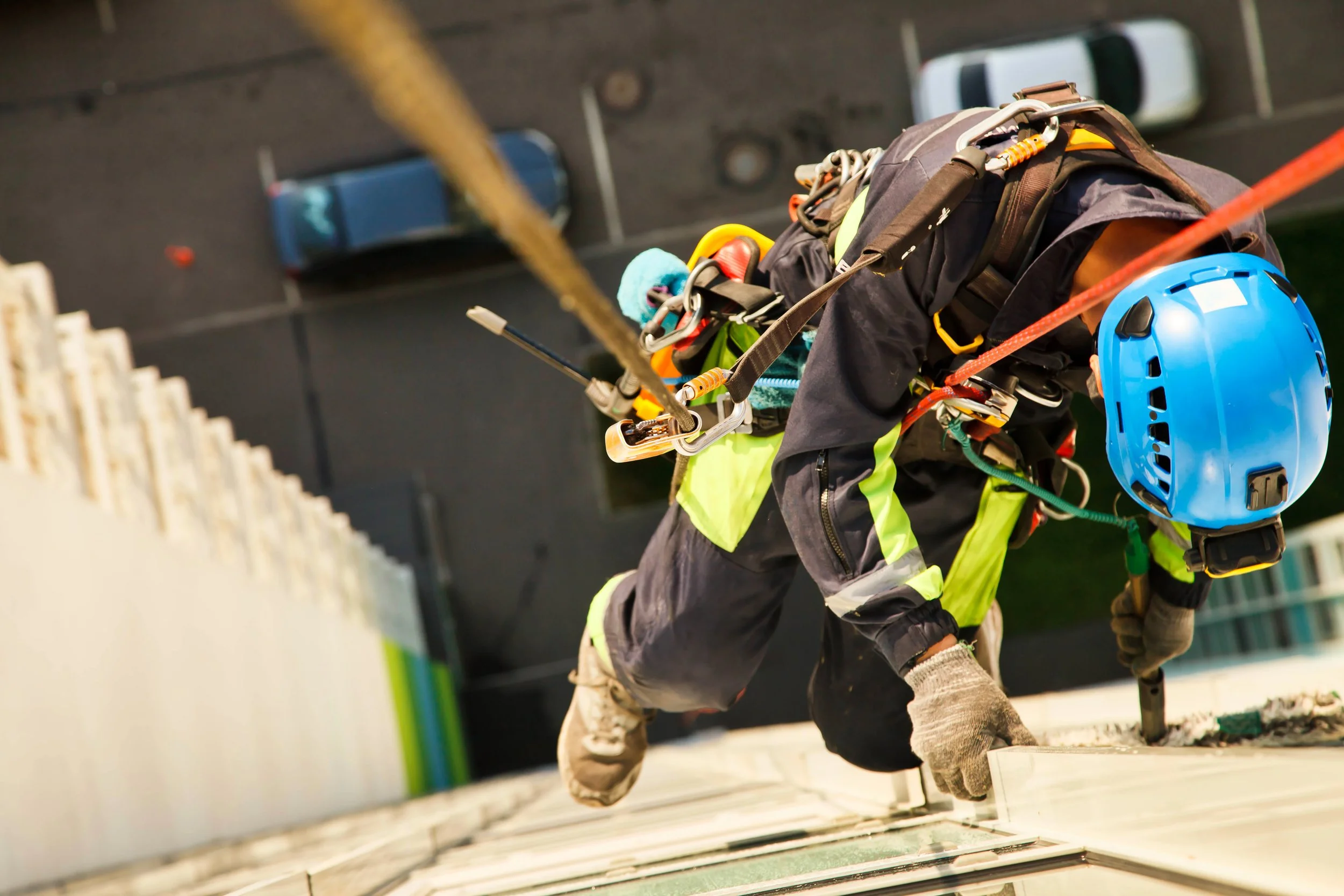
OSHA and Workplace Safety Training Classes
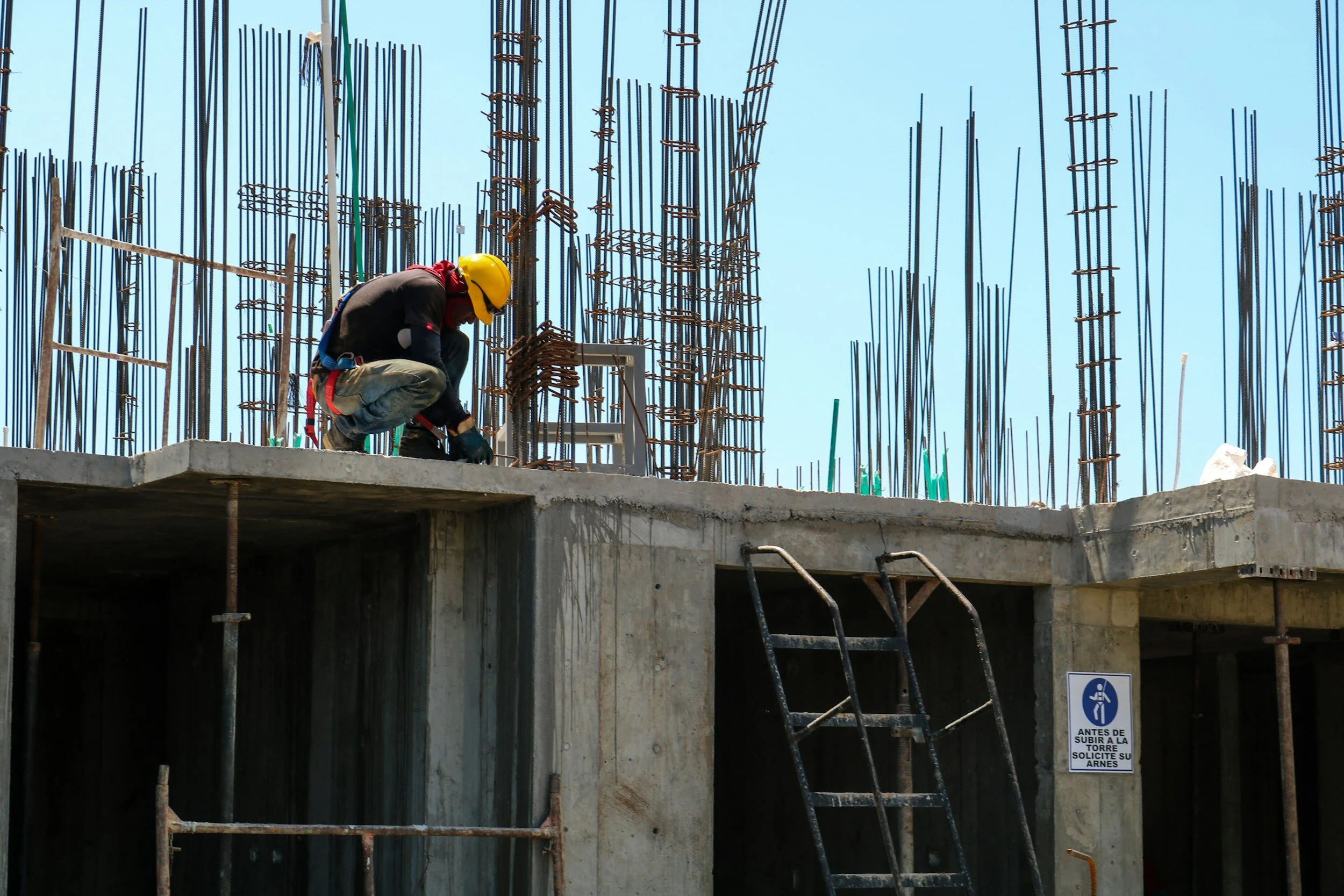
One Workplace Can Create More Than One Training Need
Your employees may face several hazards during the same shift.
One person may:
Use a ladder.
Operate equipment.
Work around electrical hazards.
Handle chemicals.
Wear PPE.
Use power tools.
Work near moving vehicles.
Perform elevated work.
And communicate with several different crews before the day ends.
Depending on the engagement, additional safety training may be available in areas such as:
Fall protection
Forklifts and powered industrial trucks
Swing-stage and suspended scaffold safety
Boatswain's chair safety
Small-crane safety
Personal protective equipment
Lockout/tagout
Electrical safety
Hazard communication
Respiratory protection and fit testing
Hearing conservation
Hand and power tools
Walking-working surfaces
Housekeeping and jobsite safety
Emergency action plans
Rescue planning
Fire protection
Signs, signals, barricades, and flagging
CPR, AED, first aid, and bloodborne pathogens
Material handling
Workplace violence awareness
New-employee safety orientation
Toolbox talks
Site-specific workforce training
Start by telling Boston Safety & Compliance:
What work your employees perform
What equipment they use
What hazards concern you
What prompted the request
What documentation or project requirements you have
From there, the appropriate training can be discussed.

Training Grounded in Experience Across Industries, Jobsites, and Investigations
You should know who is training your people, because real experience shapes the answers they get when the questions stop being theoretical.
Jeffery Barnett, owner and Chief Consultant of Boston Safety & Compliance, has taught safety courses and provided safety services in 26 states across more than 35 industries. His experience includes work with major general contractors and tower climbing and safety training for NOAA in Kansas City, Missouri.
Jeffery holds more than 20 safety-related certifications, including:
Certified Safety and Health Official (CSHO)
Safety, Health & Environmental Professional (SHEP)
CERTA
First Aid/CPR
He is also working toward his Master Certification.
His broader experience includes OSHA compliance, workplace investigations, construction safety, fall protection, scaffolds, aerial lifts, safety-program development, high-risk work environments, and workplace accident analysis.
Jeffery has also served as an expert witness in court and worked on over 30 cases, giving him firsthand experience reviewing what happened after an incident, what conditions existed, what people knew, what was documented, and what decisions were made before things went wrong.
That matters when your team starts asking real questions:
What if conditions change?
Can we use the equipment this way?
When does this become unsafe?
What should the supervisor do next?
Your people deserve more than a slide deck and a regulation number. They deserve answers from someone who understands how safety rules, equipment, jobsite conditions, and real-world decisions come together.
A Simple Plan for Getting Your Team Trained
-

Tell Us What Your Team Is Facing
Share:
Your industry
Workforce size
Location
Employee roles
Equipment
Project requirements
Known hazards
Why training is needed
-

Identify the Right Training
Boston Safety & Compliance can help determine whether the need points toward:
OSHA 10
OSHA 30
Ladder training
Lift training
Scaffold training
Fall protection
Specialized equipment training
Customized OSHA compliance training
Another safety topic
-

Confirm the Details
Discuss:
Date
Location
Delivery format
Number of participants
Prerequisites
Equipment
Documentation requirements
Travel or venue needs
-

Train for the Work
Employees receive instruction connected to the hazards, responsibilities, equipment, and decisions relevant to the engagement.
-

Keep Building Where Needed
If the training conversation identifies a broader safety concern, Boston Safety & Compliance can also discuss:
Recurring instruction
Toolbox talks
Supervisor development
Workplace safety consulting
Jobsite inspections
Safety audits
OSHA compliance support
Safety-program development
Training should solve the problem you actually have, not create another complicated program you do not need.
Not Sure Which Safety Class Your Team Needs?
You do not have to figure that out before contacting us.
Maybe someone handed you a requirement you are not sure how to interpret.
Maybe a supervisor knows the crew needs training but does not know which course fits.
Maybe an inspection exposed a gap.
Maybe you are onboarding new employees.
Maybe a new project is starting.
Or maybe you know the way the work is being done is creating more risk than you are comfortable carrying.
Start with the work.
Tell us:
What do your employees do?
What equipment do they use?
Where do they work?
What prompted the training request?
That gives Boston Safety & Compliance a much better starting point than simply choosing a class because its name sounds familiar.
Frequently Asked Questions About OSHA and Workplace Safety Training
-
Core training includes OSHA 10, OSHA 30, ladder safety, aerial lift and scissor lift training, scaffold safety, fall protection, and customized OSHA compliance training.
Additional training may be available for specialized workplace hazards, equipment, suspended access, powered industrial trucks, PPE, lockout/tagout, electrical safety, hazard communication, respiratory protection, emergency preparedness, tools, and other qualifying topics.
-
Yes.
Boston Safety & Compliance is based in Chickasha, Oklahoma, and serves qualifying businesses and organizations outside the state.
Jeffery has taught safety courses or provided safety services in over 20 states and has traveled coast to coast for client engagements.
Availability for a particular class depends on the training, location, participant count, schedule, travel, equipment needs, and applicable course requirements.
-
Jeffery has provided safety training in more than 35 industries, and that number continues to grow.
Because safety needs can differ significantly between workplaces, the training discussion should still begin with the actual work, hazards, equipment, workforce, and requirements involved.
-
OSHA 10 is generally used as more introductory education for workers, while OSHA 30 provides more extensive instruction often selected for employees with broader supervisory or safety responsibilities.
The appropriate course depends on the employee's role and applicable requirements.
-
Yes.
Customized OSHA compliance training can be developed or adapted around your:
Industry
Workforce
Equipment
Known hazards
Project requirements
Corrective actions
Policies
Training needs
Safety objectives
The point is to address recognizable workplace conditions rather than force every organization into the same presentation.
-
Yes.
An engagement may involve one crew, a growing contractor, or a larger organization requiring multiple classes, recurring instruction, or support across teams.
The scope should fit the company instead of forcing the company to fit the training.
-
Training may be available for qualifying work activities and equipment, including aerial lifts, scissor lifts, ladders, scaffold systems, suspended access, and other specialized topics.
Exact course scope, prerequisites, hands-on requirements, documentation, and certification terminology should be confirmed during scheduling.
-
No.
Training is only one part of workplace safety and OSHA compliance.
Compliance may also depend on:
Applicable standards
Workplace conditions
Equipment
Supervision
Policies
Hazard controls
Documentation
Implementation
Employee practices
No responsible trainer should promise that completing one class automatically makes an entire company compliant.
-
No.
The outcome depends on the course.
A training program may result in:
An OSHA Outreach card
Course-completion documentation
Employer training records
Operator documentation
Awareness training
A specialized credential where applicable
The exact outcome should be confirmed before scheduling.
-
Sometimes.
Training may be one part of an employer's response when a knowledge or training gap has been identified.
But training by itself does not necessarily resolve every OSHA citation, investigation, or corrective requirement.
Businesses needing broader assistance should also review OSHA Citation & Investigation Support.
For serious incidents or workplace fatalities, Boston Safety & Compliance can discuss the appropriate response and support separately.
-
Yes.
Boston Safety & Compliance can discuss:
Recurring workforce instruction
Toolbox talks
Supervisor training
New-hire education
Site-specific safety topics
Ongoing workplace safety support
Recurring training may be especially useful for growing organizations where employees, projects, equipment, and crews change over time.
-
Onsite training may be available for qualifying engagements.
Location, workforce size, travel, equipment, venue requirements, course rules, and scheduling should be discussed during the consultation.
When Your Team Faces Real Hazards, Generic Training Is Not Enough
Your workers make safety decisions every day on ladders, on scaffolds, in lifts, around machinery, around electricity, on roofs, with tools, near moving equipment, and in environments that can change between the start of the shift and the end of it.
You cannot make every decision for them.
But you can make sure they have been taught what to recognize, what is expected, and when something is wrong.
Boston Safety & Compliance helps businesses turn OSHA requirements and workplace safety principles into practical instruction employees can carry back into the field.
Because the real measure of training is not how the presentation looked.
It is what your people do when the next hazard is standing in front of them.
Boston Safety & Compliance — Real-World Training for the People Responsible for Keeping Your Team Safe.